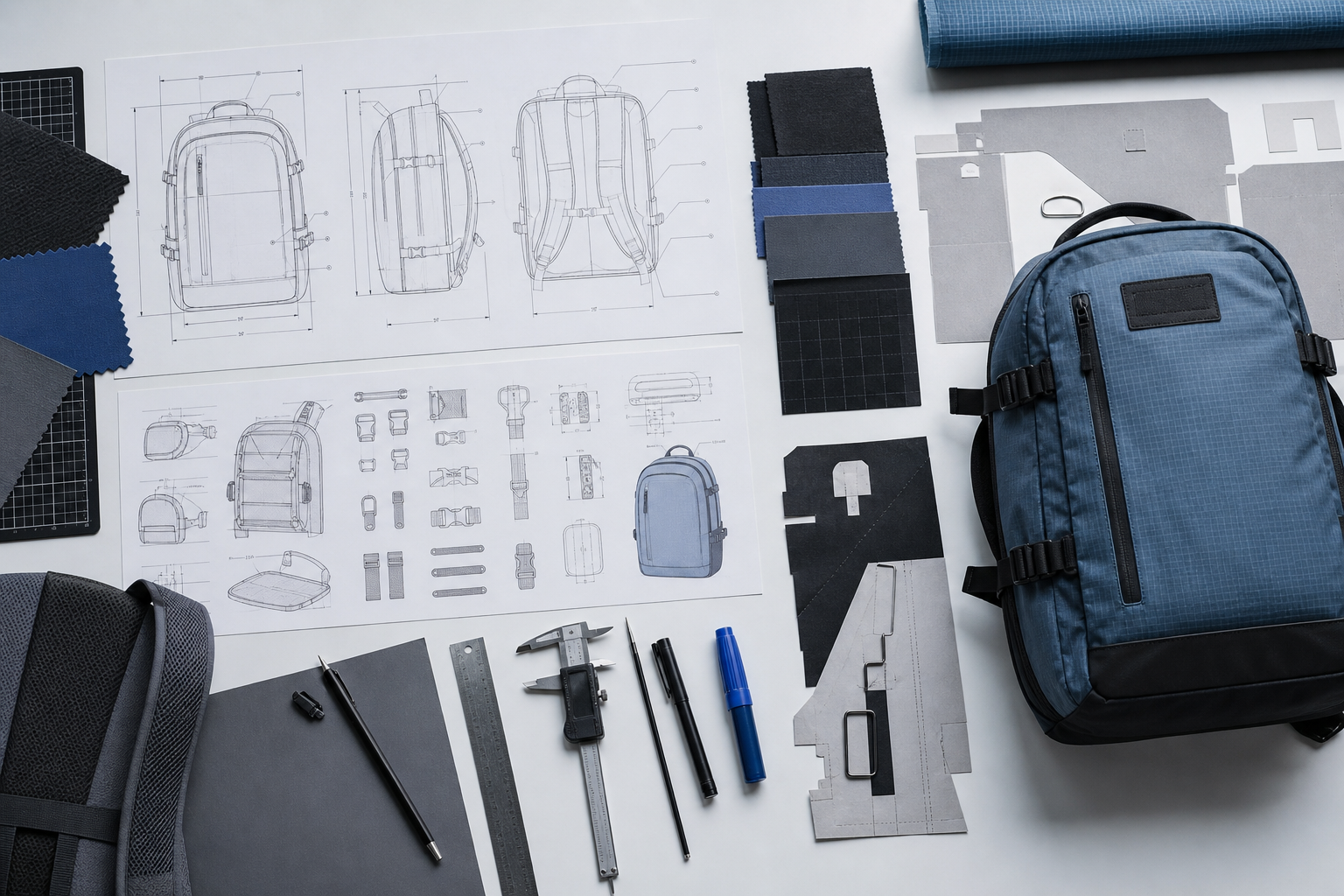
Custom Bag Sampling: How to Review and Approve
Load it, measure it and record the changes. A sample review sequence and feedback log that help separate corrections from new design requests.
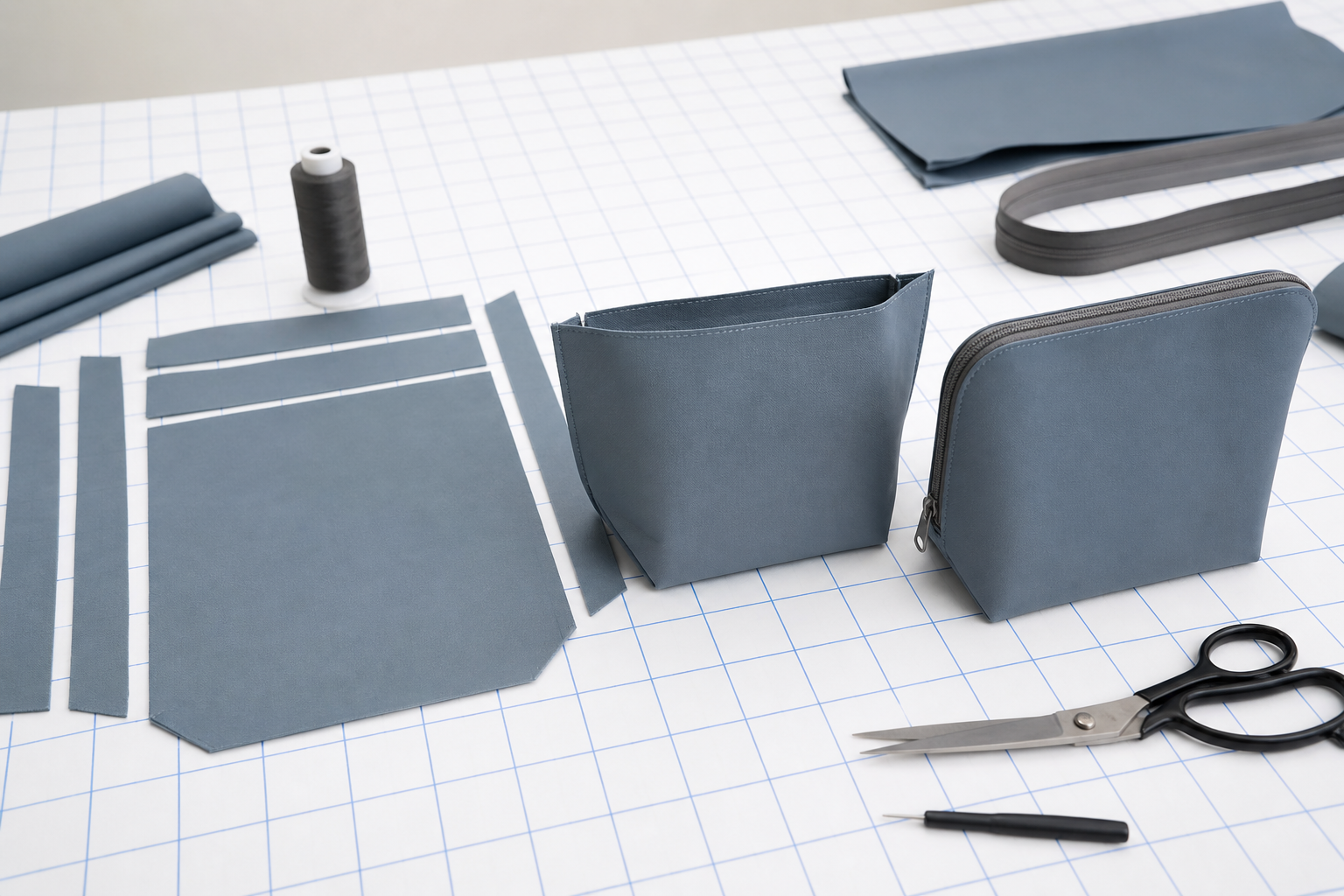
The first thing to do with a new sample is put the intended contents inside. Not take a flattering photograph. A bag that looks correct when empty may tilt when loaded, catch a bottle at the opening or make a laptop difficult to remove.
A sample review should produce decisions, not a long chain of comments. Agree what the sample is meant to prove, inspect it in a consistent order and send one consolidated response. That makes the next round easier to evaluate.
Where this sample sits in the development process
Sample names vary between suppliers. Ask what is represented accurately and what is provisional. An early construction sample may use an available fabric to check shape. A color approval piece may demonstrate the material without proving the finished bag. Neither should be mistaken for complete production approval.
| Review stage | Main question | What may still be open |
|---|---|---|
| Construction review | Does the shape, access and organization work? | Final color, trim or decoration |
| Material and branding review | Are the selected components and application acceptable? | A remaining fit or assembly change |
| Production-reference review | Do the sample and final files agree? | Only explicitly recorded exceptions |
| Packed-sample review | Does the packing protect and present the bag as required? | Carton details if not yet supplied |
Record the sample reference and date when it arrives. Keep the packaging and any supplier notes. If the body fabric is a temporary substitute, write that at the top of the review rather than commenting on it as though it were the proposed final fabric.
Review function before finish
Use the same contents that the buyer expects the bag to carry. For a school backpack, include the actual book and bottle sizes. For a toiletry bag, use the intended containers. Check access with the bag open and closed, not just capacity.
Work through the carrying sequence. Pack the bag, close it, lift it, adjust the straps, carry it briefly and retrieve the items. Check whether pockets remain accessible under load and whether the bag sits as intended. Do not describe a casual handling check as a certified load test.
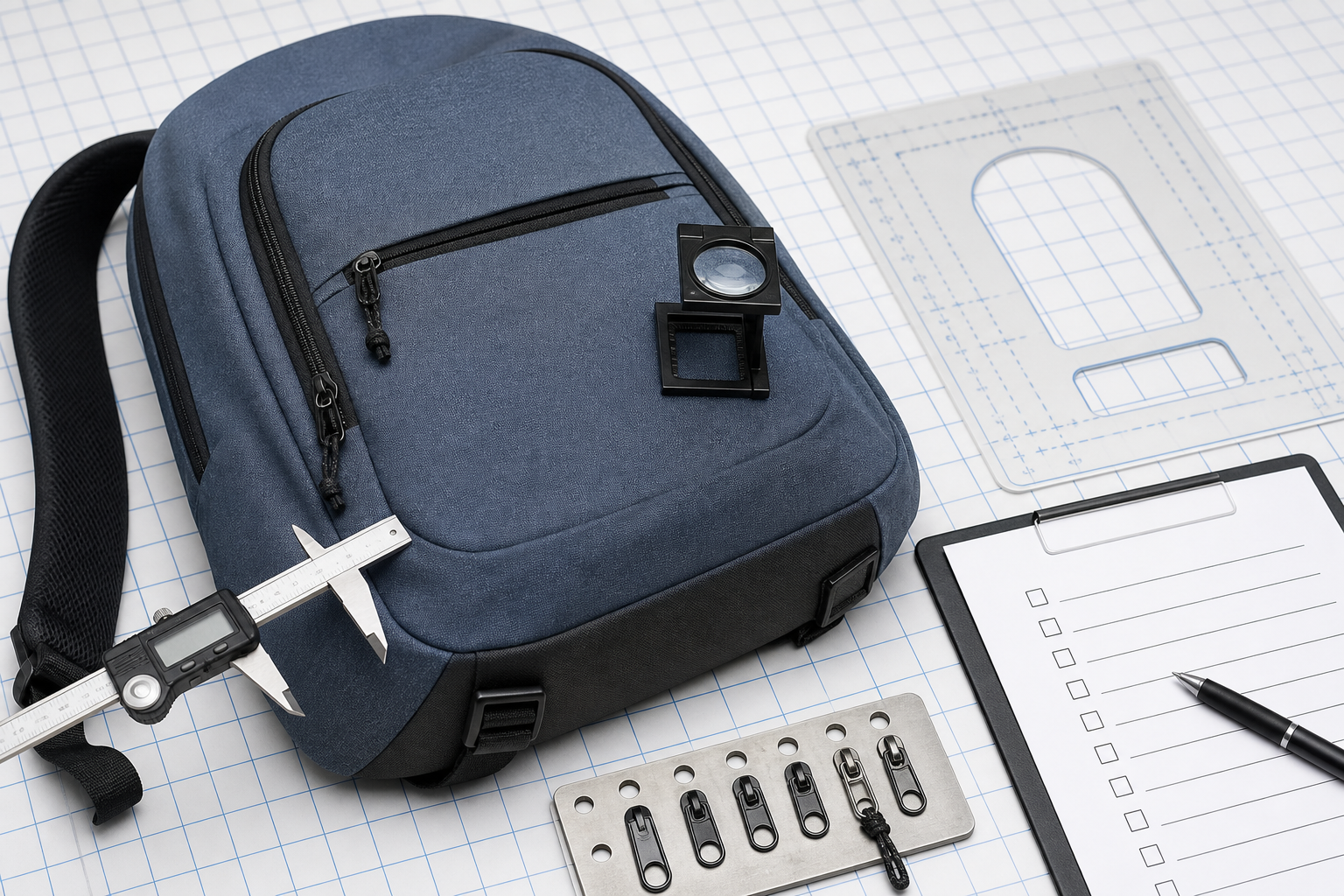
Next measure the agreed points. Note how the bag was positioned: empty, filled or laid flat. Include a ruler in photographs where size is the issue, and reference the current drawing so a different measurement method does not create a false discrepancy.
Then inspect materials and appearance
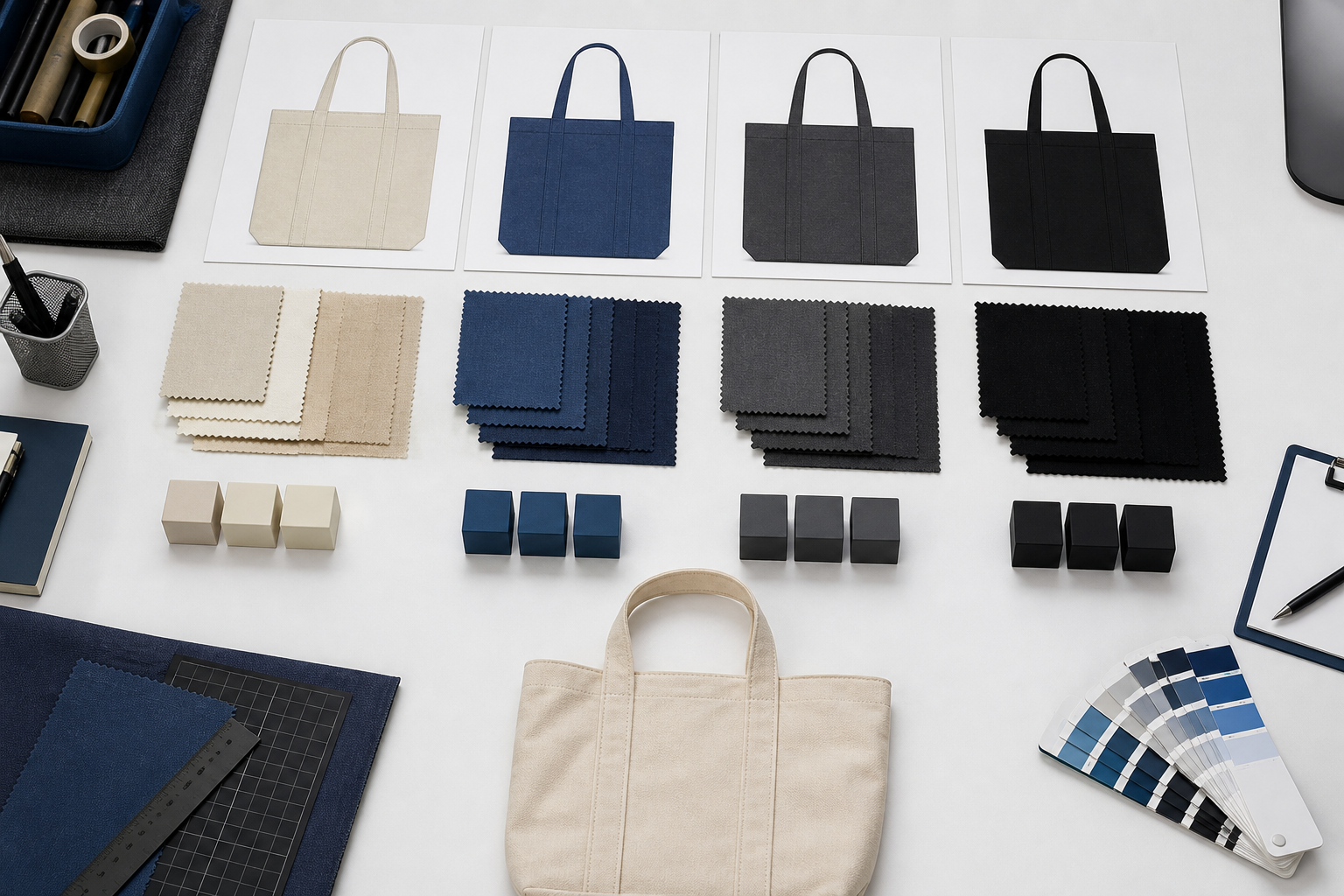
Compare the sample with approved swatches and artwork, not memory. Check lining, zipper tape, webbing and hardware as well as the visible shell. Look at both faces and inside the bag.
Review seam alignment, binding, loose threads, visible marks and decoration placement. Open every pocket and operate each closure. On a lined pouch, check that the lining does not catch in the zip. On a folding tote, check the packed shape and whether repeated folding creases the decoration.
Group findings by what they affect. A functional issue should not get buried between two minor appearance preferences. If a concern needs formal testing or a laboratory result, identify that separately from the visual review.
Write feedback the sample maker can act on
The example below is fictional. Its measurements show how to describe a change; they are not tolerances for every bag.
| Reference | Finding | Requested action | Type |
|---|---|---|---|
| Photo A, inside pocket | Intended charger catches at the opening | Increase clear opening by 15 mm and confirm fit | Design change |
| Photo B, front logo | Placement differs from approved drawing | Return placement to the dimension in revision 02 | Correction |
| Photo C, strap | Buyer prefers a softer feel when loaded | Propose an alternative and show cost impact | New request |
Use one line per decision. Mark whether a change corrects the agreed brief or changes that brief. Both can be valid, but their effects on time and cost may differ.
Avoid several people sending separate marked-up photos. Collect comments internally, resolve contradictions and nominate one approval contact. Send a complete numbered set so the factory can reply to each point.
Decide what needs another physical sample
Not every comment requires a new complete sample, but do not approve an important change only because it looks small on paper. A revised opening, load-bearing attachment, material stiffness or pocket arrangement may affect how the bag works.
Ask what evidence is appropriate for each correction. Some appearance details may be reviewable through clear photographs or a component sample; fit and handling changes often need a physical review. Agree the approach and record which points remain unapproved.
If the next sample solves one issue but changes something previously approved, flag the new difference. Approval should not be a moving target where each round quietly reopens the whole design.
Close the gap between sample and paperwork
Before bulk approval, align the physical sample, measurement schedule, material list, artwork and packing instructions. Record the approved sample ID and latest file revision. Specify what happens if a document and the sample disagree.
Keep an approval record with the date, reviewer, accepted changes and remaining exceptions. “Looks good” in a message is difficult to use when several samples and file versions exist. A clear sign-off should identify exactly what is approved for production.
Truedrape's 7–10 day sample timing is a planning reference, subject to the brief, materials, construction and agreed schedule. It is not the full calendar allowance for courier transit, your review and additional rounds. Work backward from the required arrival date and allow time for decisions.
See our sampling and production checkpoints for the project delivery route. If you are still defining the product, use the brief checklist first. Once the sample is settled, the quality-control guide helps turn those approvals into inspection points.