Custom Bag MOQ: Planning Colors and Quantities
One style is not one SKU. Work through color splits, shared components and packing quantities before treating the MOQ as a finished order plan.
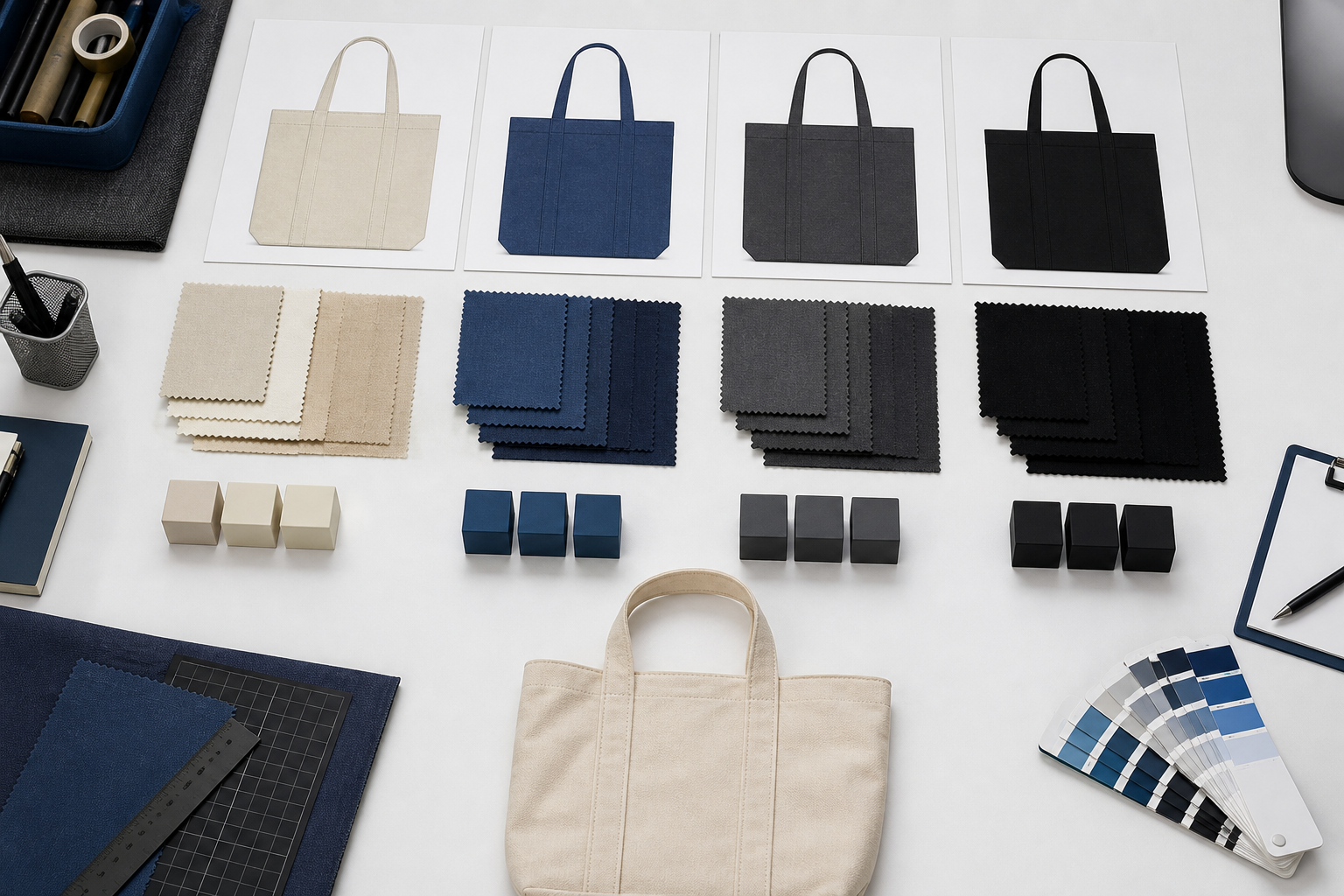
A collection of six colors can look convincing on a presentation board. It can be much harder to source efficiently when the first order is small. Each new color may create another fabric purchase, decoration setup, label or packing combination.
Start with how the range will be sold or distributed. Decide which variants have a clear job and which are there mainly because the color card offers them. The aim is not always to reduce choice; it is to understand what each additional choice commits you to.
Custom bag MOQ: style, color and component minimums
A style-level MOQ describes one part of the production discussion. Fabric, special colors, hardware, printed packaging or decoration can have separate minimums or setup costs.
Truedrape uses a combined MOQ of 100 pieces per style as a planning reference. That does not mean every possible color split or custom component is available at that quantity. The proposed construction, materials, decoration and assortment need to be reviewed together.
Ask whether the quotation assumes an available material color or a custom color. Confirm which components are shared across the order and which are sourced separately. If a special part drives the minimum, ask what changes when an available alternative is used.
Turn the assortment into a quantity table
The fictional example below shows the arithmetic of a 240-piece order. It is not a statement that either split has been approved for manufacture.
| Plan | Navy | Black | Stone | Olive | Other colors | Total |
|---|---|---|---|---|---|---|
| Two-color opening order | 150 | 90 | — | — | — | 240 |
| Four-color opening order | 80 | 70 | 50 | 40 | — | 240 |
| Six-color opening order | 40 | 40 | 40 | 40 | 80 across two colors | 240 |
The total is unchanged, but the purchasing and packing work is not. The six-color version creates six shallow quantities. Whether that is sensible depends on demand, material availability and the role of each color.
Do not divide equally by habit. A chain-store procurement team may specify one core color in depth and one test color in a smaller quantity. A corporate program may need exact allocations for separate offices. The table should reflect the actual distribution plan.
Count every difference that creates a SKU
A new size, lining color, logo, hangtag or destination label can create another version even if the outside fabric is unchanged. Identify those combinations early.
For example, a navy pouch with two different printed logos is not one interchangeable pool of navy stock for packing purposes. The bags need separate identification. If a set contains three pouch sizes, specify whether the quantity refers to individual pouches or complete sets.
Use a short reference for each combination. Carry that reference through the purchase order, artwork file, inspection sheet and packing list. This helps prevent a correct total from hiding the wrong assortment.
Share components where the buyer will not lose value
A common lining, zip tape or standard puller may let several colors share the same component purchase. It can also make repeat orders easier to describe.
However, sharing should be deliberate. A black zip may be a good visual choice across a range, or it may undermine a tonal design the buyer cares about. Compare the assembled appearance before making the decision purely on a spreadsheet.
Ask the supplier to quote meaningful alternatives. “Two shell colors with shared black trims” versus “two fully tonal versions” creates a useful comparison. “Please make it cheaper” does not identify which design decision can change.
Look at the whole first-order cost
Keep the unit price, sample work, special components, decoration setup, packing and delivery assumptions visible. A lower bag price is not automatically a lower project cost when packaging or a custom part is excluded.
Confirm the quantity basis of each charge. Does the price assume one artwork across the full order, or separate artwork for each color? Are labels supplied by the buyer? Is a sample charge included, separate or credited under an agreed condition? Record the actual answer rather than assuming a standard policy.
The delivery destination and packing format also matter when reviewing a proposal. A folded tote and a structured vanity bag may use very different shipping volumes. Ask for the packing assumptions before comparing delivery estimates.
Plan the approval calendar with the quantity plan
A smaller order still needs material, artwork, sample and packing approval. Reducing units does not automatically remove those steps.
Work backward from the required arrival date, allowing for material availability, sample review, production, inspection and transit. Truedrape's 30–45 day bulk-production reference is subject to final approval and the agreed order schedule; it is not an arrival-date guarantee.
If a custom color threatens the calendar, decide whether the color is essential or whether an available alternative can be reviewed. Make that choice before the sample is treated as final.
Leave a clear record for the repeat order
After the first delivery, review demand by SKU rather than by style alone. Record sell-through or distribution feedback, returns, fit comments and the quantities left. Use that information to decide whether to deepen a core color, adjust a detail or add a new version.
Keep the approved component codes and sample reference. Reordering “the same navy bag” is less reliable than referring to the agreed style, material, artwork and packing revision. Confirm availability and timing again; a past order does not guarantee that every component is still available.
Before requesting a quote, send the full quantity table, mark any flexible quantities and identify your non-negotiable colors. Review the reference bag categories, or send your planned assortment with your target timing so the complete proposal can be assessed.