OEM vs ODM Bags: Which Route Fits Your Project?
An existing design can save development work, but not every change is a small one. Compare the two routes before asking for a sample.
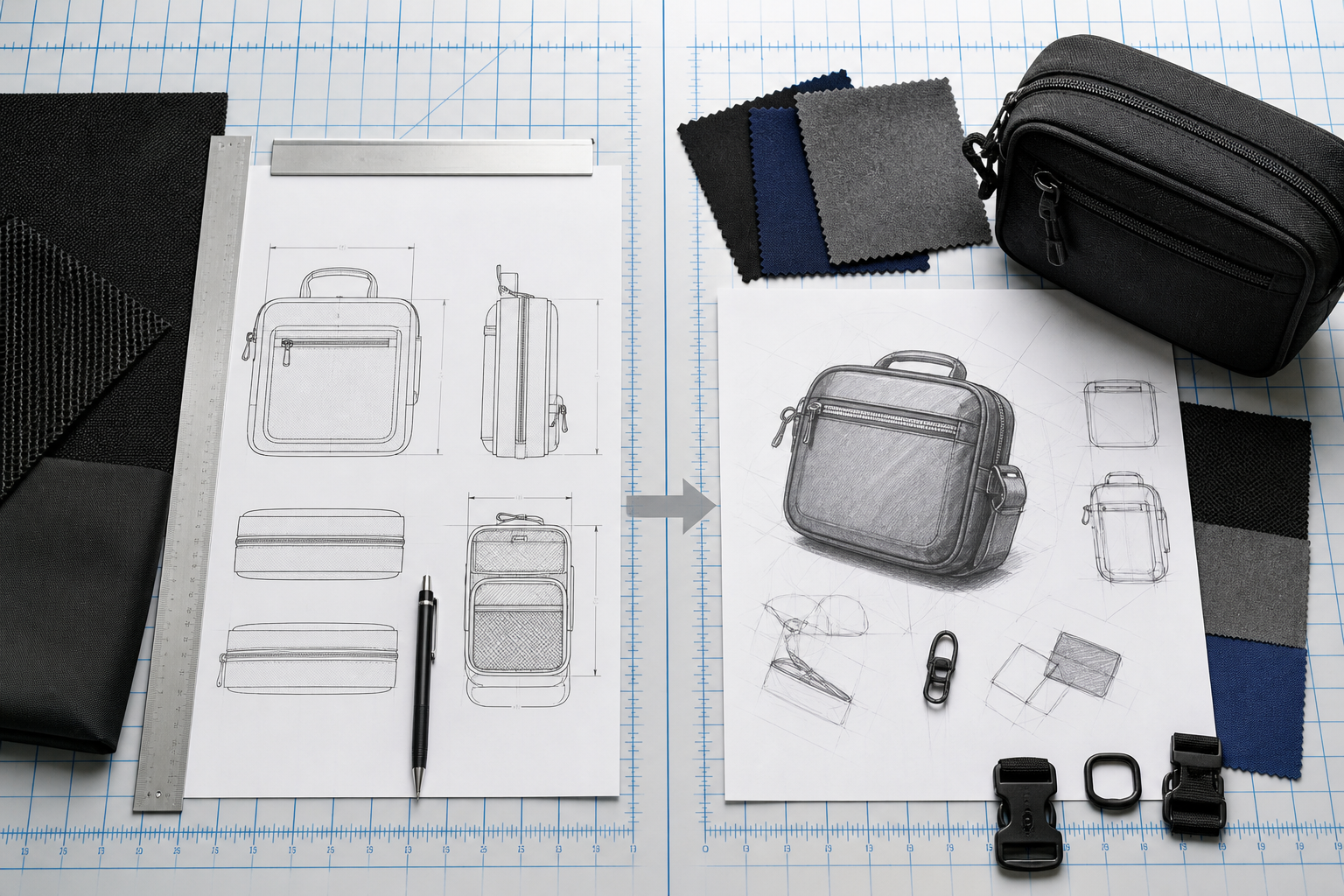
The useful question is not “Do you offer OEM or ODM?” It is “How much of this bag is already decided, and who is going to decide the rest?”
Two buyers can request the same black backpack and need very different development work. One has a tested sample and controlled specifications. The other has a target customer and a few reference photos. Both may call the project OEM. A supplier may use the same label differently. Agree the actual work before comparing prices or timing.
OEM vs ODM bag development: what changes
In an OEM-style project, the buyer brings a defined design or specification and asks a manufacturer to make it. In an ODM-style project, an existing supplier design or construction is the starting point, with agreed changes for the buyer.
These are working descriptions, not a guarantee about design ownership, exclusivity, stock availability or the amount of development included. A catalog reference is not automatically available off the shelf. At Truedrape, products are directions for customization, not ready-stock offers.
| Your starting point | A sensible discussion | What still needs approval |
|---|---|---|
| Tested sample, drawings and component list | Manufacture against the supplied specification | Feasibility, material match and production sample |
| Existing shape with new colors and branding | Adapt a reference construction | Color, application method and decoration placement |
| Clear use case but no defined structure | Develop from a suitable starting design | Capacity, access, compartments and carrying details |
| Reference shape with substantially different pockets or size | Review whether new pattern work is required | Revised construction, cost and sample timing |
Ask the supplier to describe its scope in plain language. That answer is worth more than a label on the quotation.
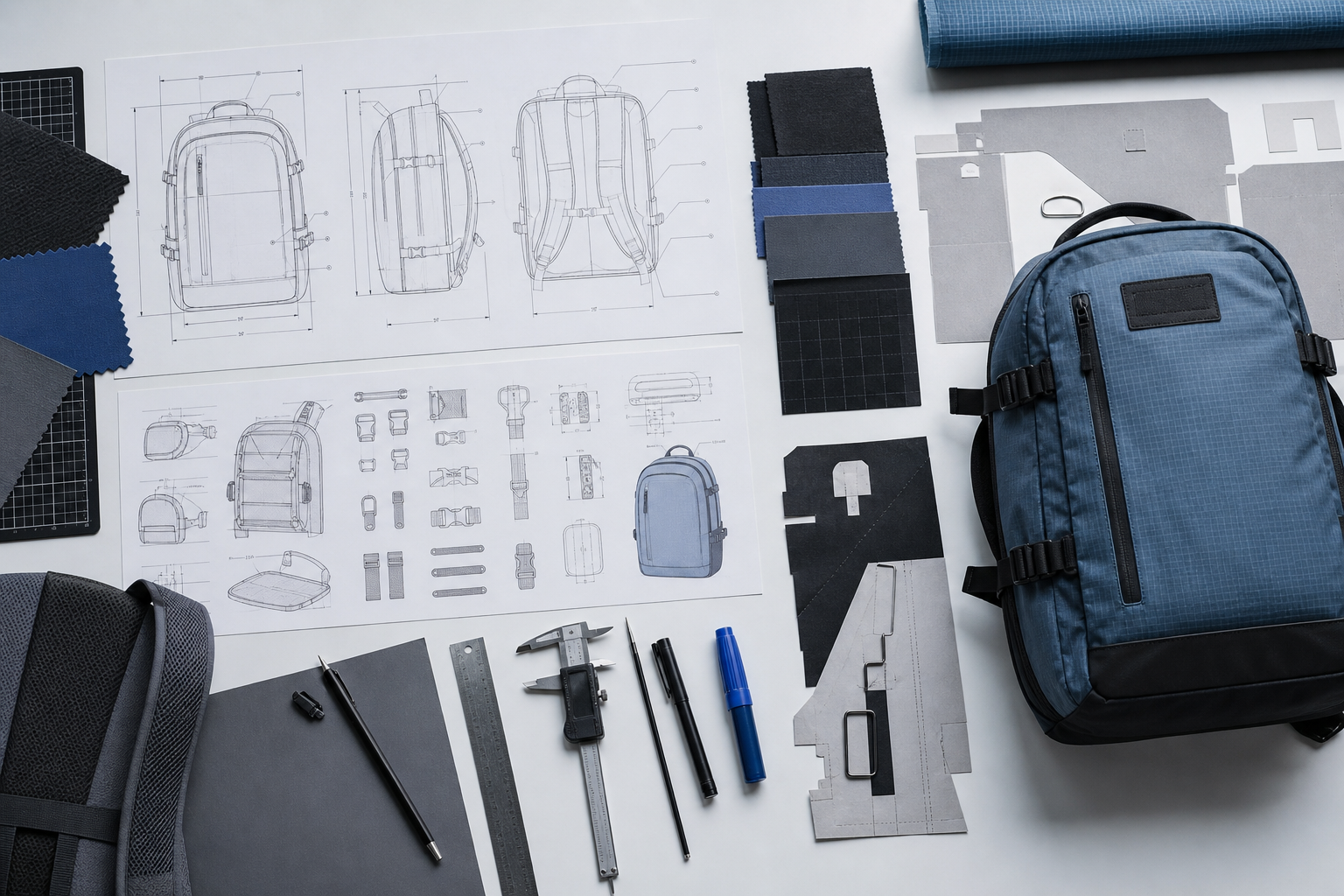
Bring your own design when the details matter
A defined design is useful when your assortment depends on a particular fit, opening, silhouette or packing format. A cosmetic bag developed around a specific bottle set cannot be judged solely by its outside shape. A laptop compartment may need to accommodate the device together with a sleeve.
Supply the latest drawings, actual dimensions and component choices. If a physical reference is available, explain which details are requirements and which are simply features of that reference. A sample that has been used for months may have stretched or softened; tell the developer whether to reproduce its original or current condition.
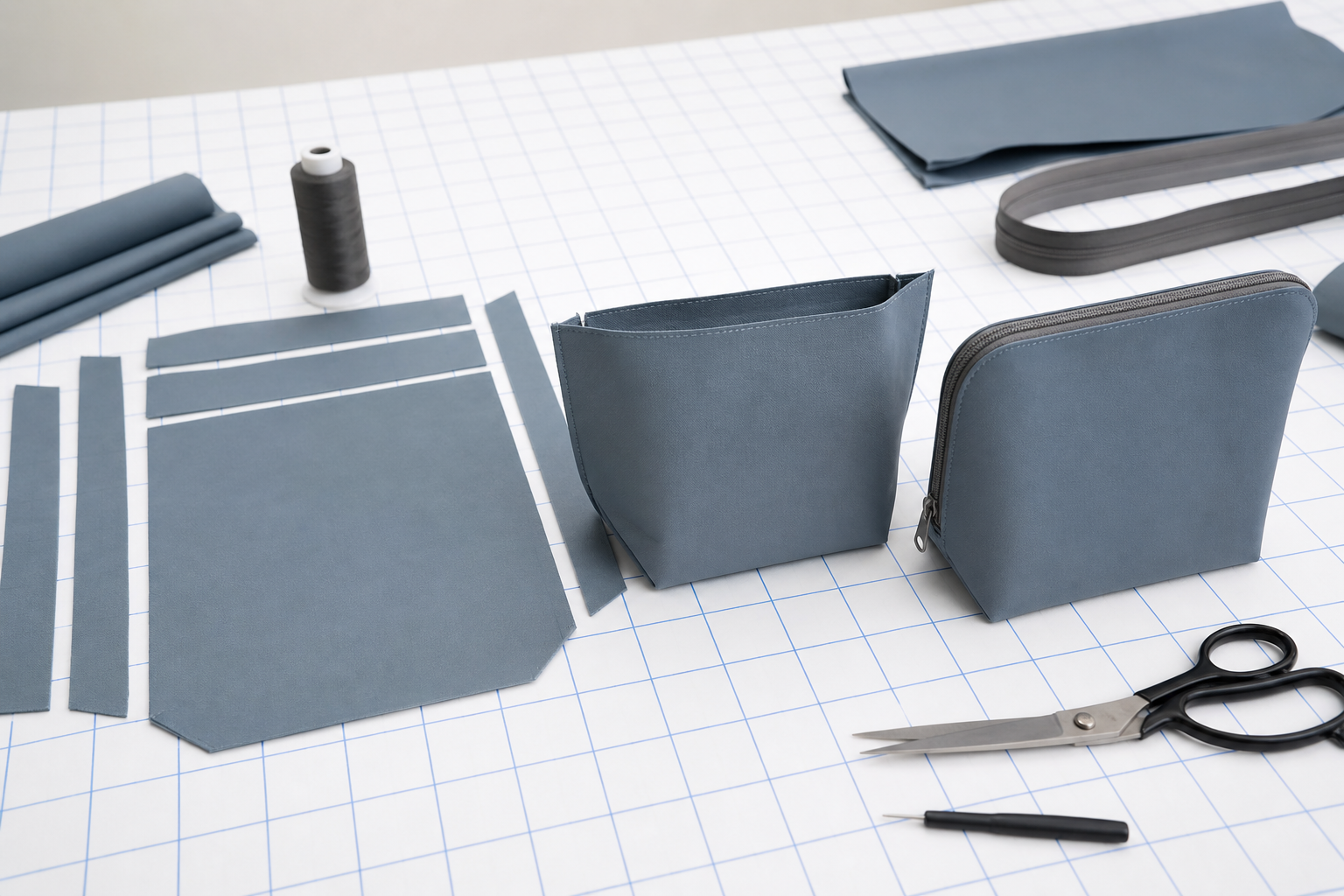
Do not assume that a drawing proves the construction is ready for production. The manufacturer still needs to check seam access, thickness at joins, material availability and how the bag will be assembled. Resolve those points during development instead of treating every suggestion as a departure from your design.
Start from a reference when you can accept its structure
A reference-led project works well when the existing arrangement already solves the carrying problem. Changing color or decoration can involve less pattern development than changing the body and pocket architecture.
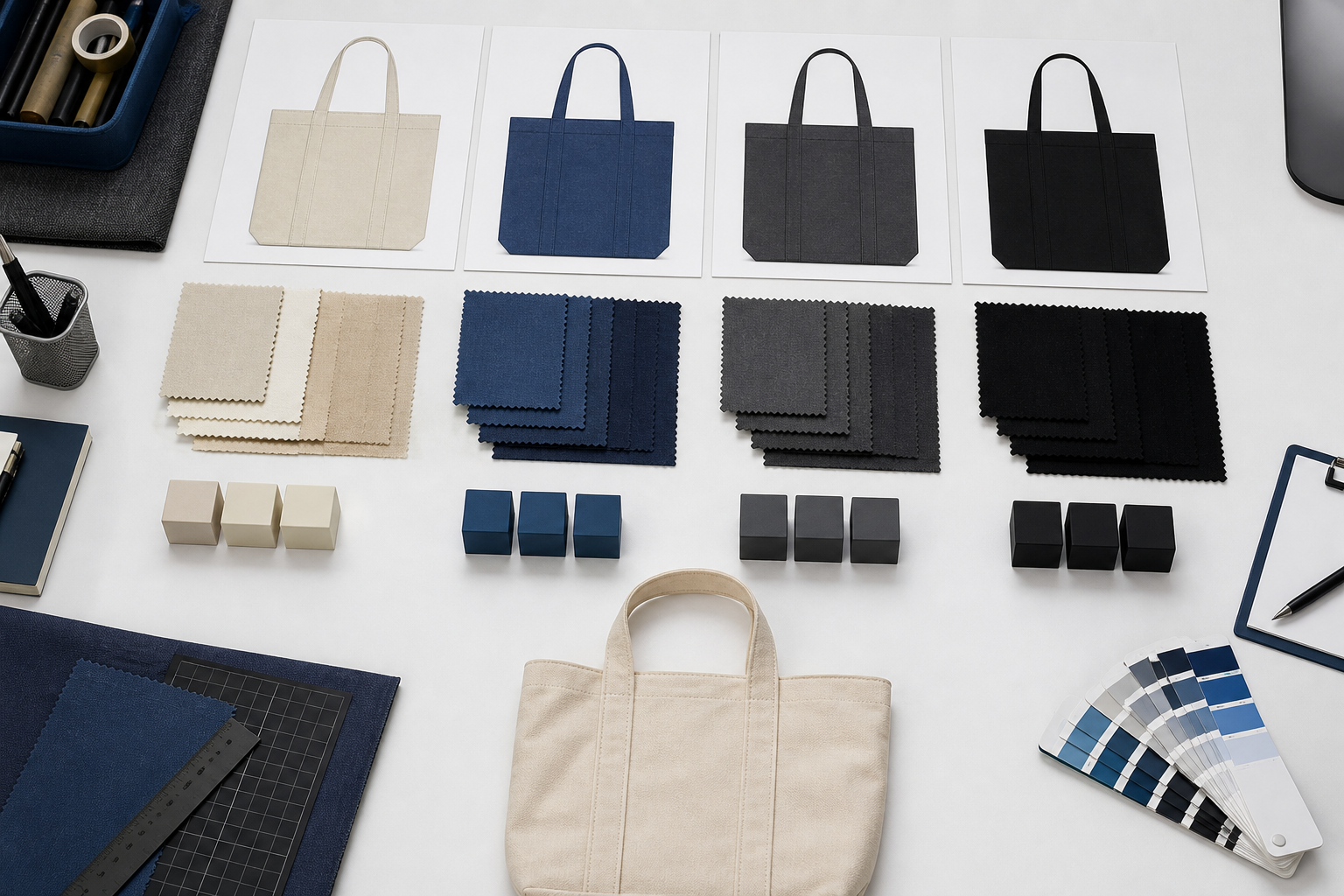
That does not mean every color or logo is straightforward. A custom-dyed fabric, molded puller or detailed embroidery may add separate sourcing and approval work. Ask whether a stocked component can achieve the same effect before committing to a special part.
A useful first message identifies the reference, lists what stays and lists what changes. “Keep the body dimensions and opening; change the lining color and add one woven label” is much easier to assess than “make it unique for our brand.”
Watch for changes that reopen the construction
Imagine adapting a simple daypack for a heavier device load. You add padding, a suspended sleeve and wider straps while keeping the same outside dimensions. The changes may affect usable capacity, panel shapes, attachment points and the way the bag opens.
Treat that as a construction review, not merely a logo customization. Ask for the effect on weight, material consumption and assembly before approving the sample request.
The same logic applies to a tote that gains a zip closure, a pouch that becomes structured, or a weekender that needs a separate shoe compartment. A familiar outline can hide a different product inside.
Compare the work included in each quote
Put quotations side by side only after you know what each covers. Record development charges, sample scope, material assumptions, artwork trials and packaging. Ask how revisions are handled and whether a change to the structure triggers a new estimate.
Separate the unit price from one-time development items. Do not divide a tooling or artwork charge across an assumed future order unless you are comfortable with that assumption. The first order and a repeat order may have different cost structures.
Before sharing proprietary files or approving a supplier-led design, agree which design elements and files each party may use. Ask specifically about any exclusivity requested. A brand label on a generic reference does not by itself make the underlying design exclusive.
What to send with your first inquiry
For either route, send the intended use, reference or drawing, finished size if known, quantity by color, branding direction, destination and timing. Explain whether the launch date is fixed and which specifications can move.
Then ask three questions:
- Which parts of this request are already covered by the reference design?
- Which changes need new pattern work, special materials or an application trial?
- What will the first sample prove, and what will remain open afterward?
If you can answer those questions together, you have a workable starting point. See how Truedrape handles OEM and ODM bag development, explore the reference product range or use the brief-writing guide to organize the information before requesting a sample.