Choosing Materials for Custom Bags
Canvas, polyester, ripstop and lining choices affect more than appearance. A practical comparison for choosing swatches and checking the assembled sample.
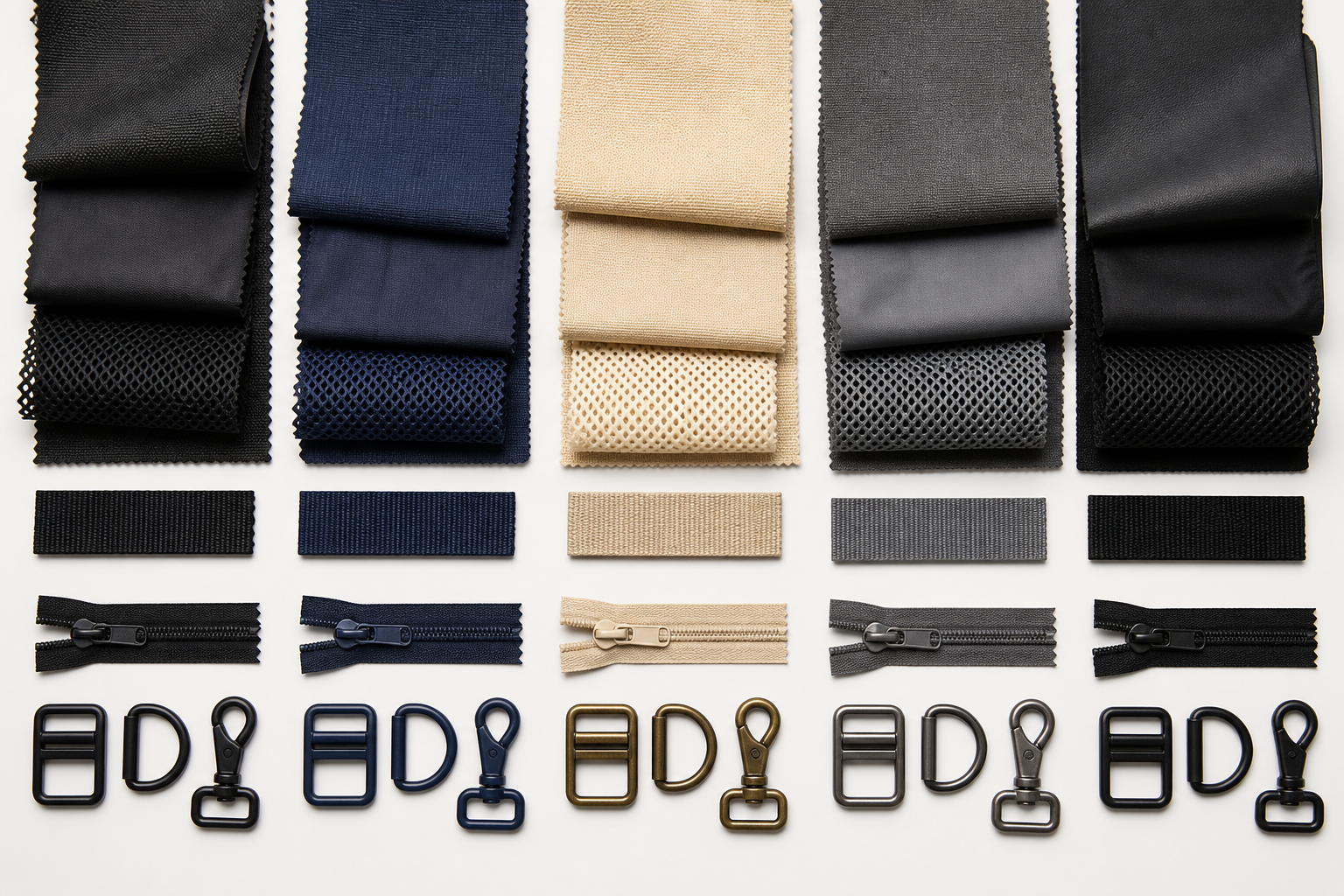
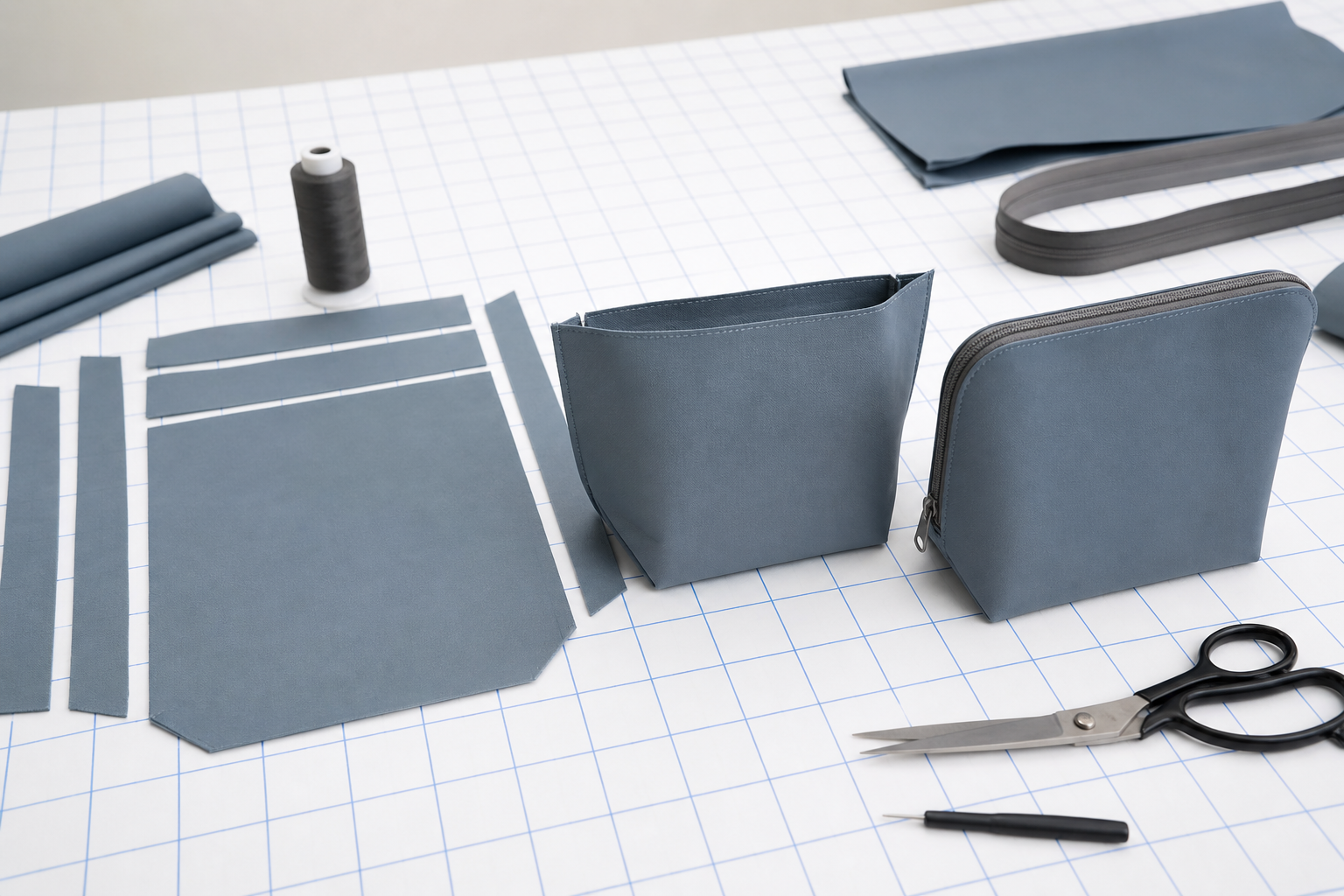
A swatch can look right on a desk and behave differently once it becomes a bag. A heavy fabric may make a small pouch difficult to open. A light shell may fold beautifully but show every edge of an internal support panel. Choose the fabric with the finished construction in mind.
Start by ranking what matters: weight, feel, shape, abrasion, cleaning, decoration or the contents being carried. You will rarely improve all of them by choosing a single “better” fabric. Ask for two or three relevant options and compare the trade-offs on an actual sample.
Do not compare material names alone
Cotton describes a fiber. Canvas describes a fabric construction and can be made from different fibers or blends. “Canvas or cotton?” therefore is not always a choice between two separate materials.
Likewise, a denier number does not describe the whole fabric. Yarn, weave, coating and finish all affect the result. Two fabrics sold under a similar description may feel and sew differently. Use the supplier's reference, composition, construction, weight and finish together, then keep an approved physical swatch.
Ask what the quoted specification includes. A face fabric with a backing or coating is not the same purchase as an uncoated fabric with a similar surface.
Compare canvas, polyester and ripstop for the job
These are directions to investigate, not guaranteed performance ratings. The actual specification and sample decide suitability.
| Material direction | Where it may fit | What to check before approval |
|---|---|---|
| Cotton canvas | Totes and pouches where texture and body matter | Finished weight, stiffness, color behavior and print result |
| Woven polyester | Backpacks, travel bags and OEM organizer formats | Weave, coating, seam behavior and abrasion at contact points |
| Lightweight ripstop | Packable bags and lightweight organizers | Fiber composition, tear behavior, opacity and packing bulk |
| Mesh | Visible organizer pockets and ventilation panels | Opening size, snag risk, edge binding and stretch recovery |
| Smooth lining | Interiors that need easy access and a clean finish | Color transfer, seam security and how easily items slide |
| Insulated layer system | Lunch and cooler formats | Layer thickness, usable space, closure and agreed performance checks |
A material can work in more than one category. A school backpack may need different choices at its base, back panel and main body. Keep those differences in the component list rather than forcing one fabric everywhere for the sake of simplicity.
Ask what the coating does
A coating or laminated backing can change hand feel, appearance and sewing behavior. Ask which face is coated, what finish is proposed and whether the sample uses the same specification as the quotation.
Water-resistant fabric does not automatically make a waterproof bag. Seams, needle holes, zipper openings and joins remain part of the construction. If keeping water out is a product requirement, describe the conditions and agree how the finished bag will be checked before making a marketing claim.
For a cooler bag, an insulated lining does not establish how long contents stay cold. Closure, load, starting temperature and use conditions matter. Treat any thermal or leak-resistance claim as a separate validation task. Do not borrow a rating from another product with a similar lining.
Look inside before increasing shell weight
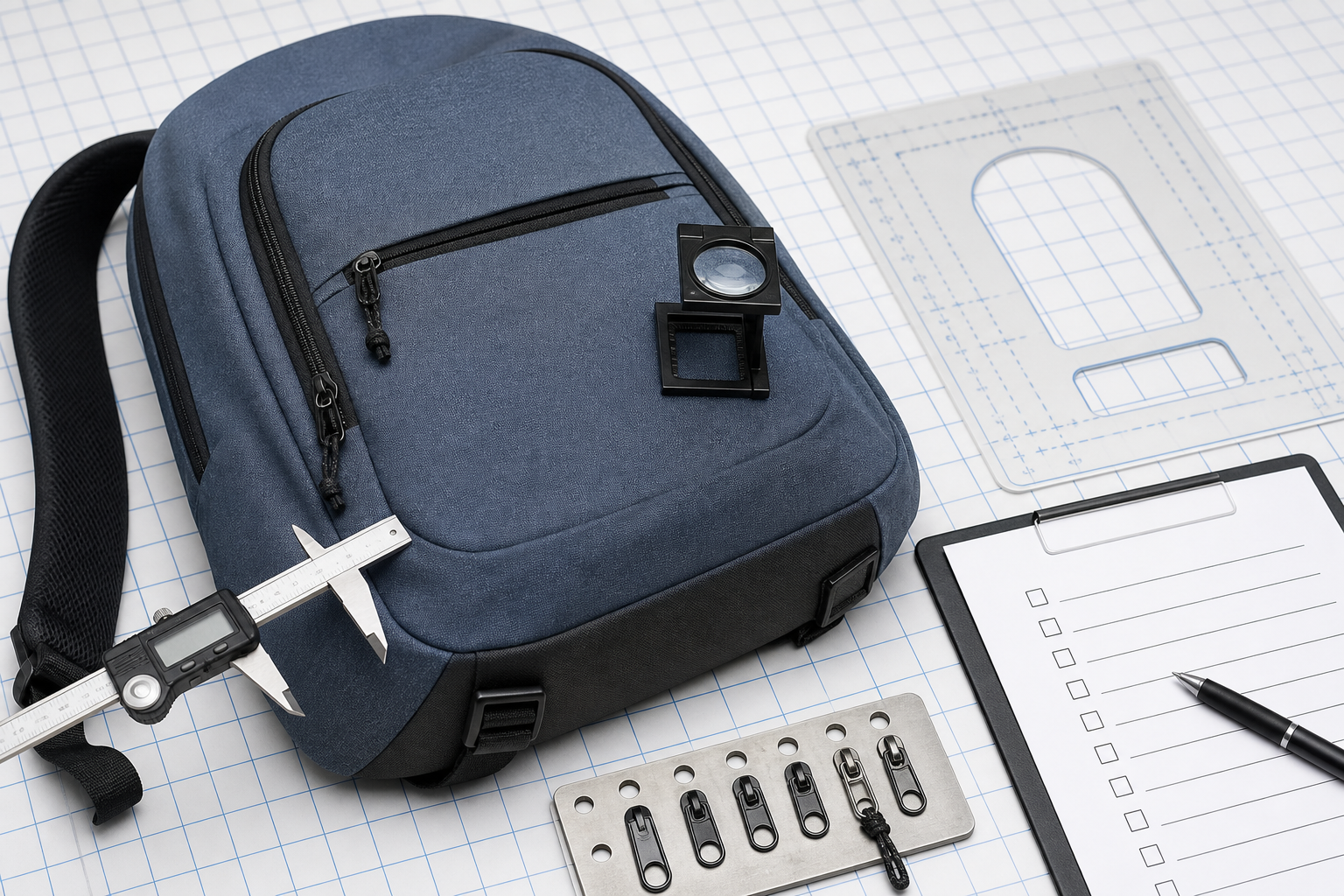
If a bag feels weak, a heavier shell is not the only possible answer. Look at the strap attachment, reinforcement, seam layout and support layers. A stiff body can still have an uncomfortable handle or a poorly supported pocket.
For a laptop bag, check the assembled sleeve with the intended device. For a cosmetic bag, put the actual bottle set inside and open the zip fully. For a packable tote, fold it into its own pocket several times. These simple use checks reveal interactions that a flat material board cannot show.
Include binding, thread, foam, zipper tape and webbing in the review. Agree which components may be substituted, and require approval before a substitution goes into the production specification.
Compare swatches under the same conditions
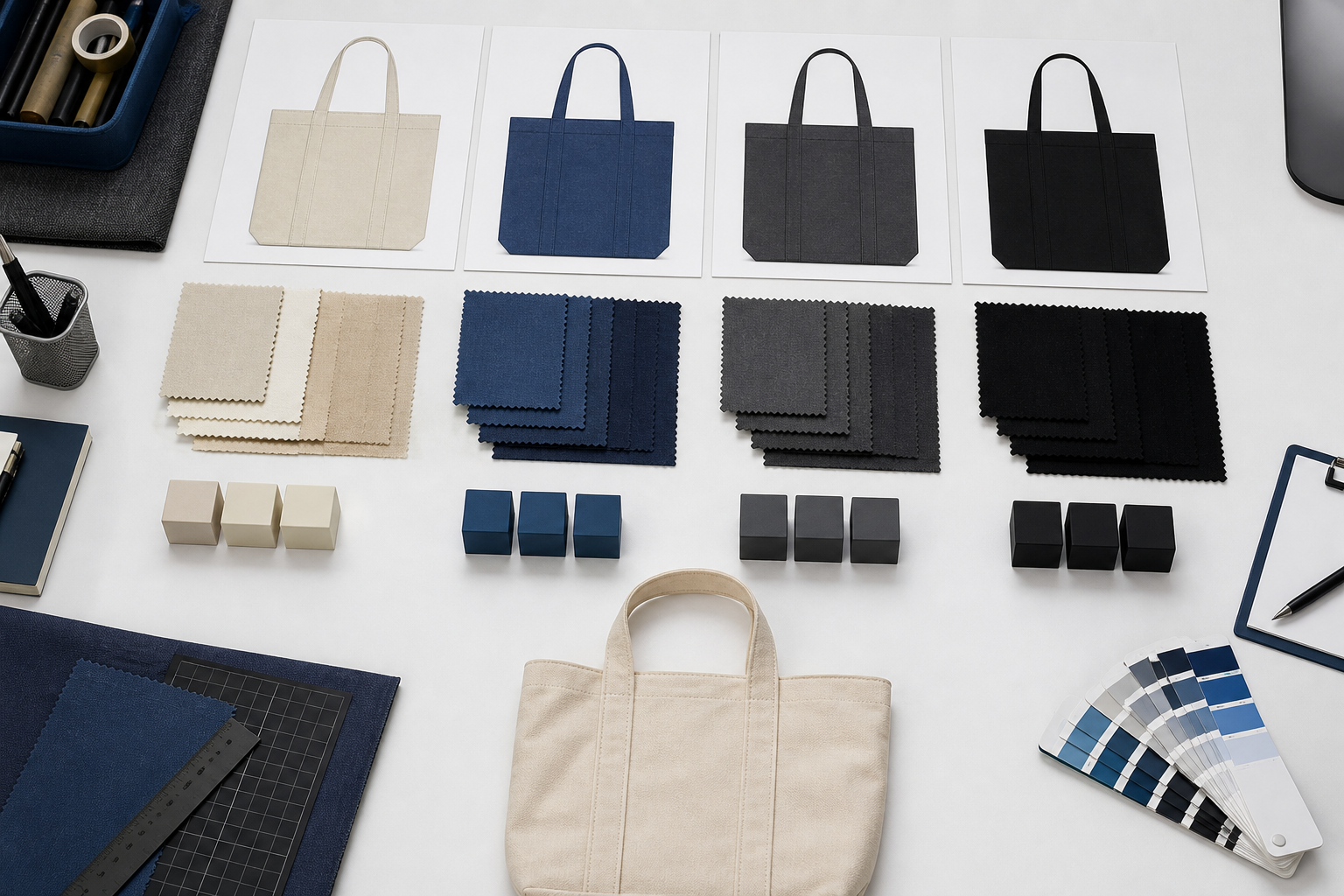
Lay the options beside one another, using the same lighting and a neutral background. Compare both faces, the cut edge and the way each piece folds. Feel the fabric after bending it; a finish that looks attractive flat may mark at a crease.
Keep a small selection log:
| Record | What to write down |
|---|---|
| Reference | Supplier code and date received |
| Intended location | Shell, base, lining or a named pocket |
| Appearance | Approved color reference and surface finish |
| Handling | Preferred stiffness, folding behavior and feel |
| Open concern | A question to resolve on the sewn sample |
| Approval | The chosen swatch and the person who approved it |
Do not approve final color from a screen alone. If different components must match, review them together. A navy zip tape and navy body fabric may look noticeably different even when each is acceptable on its own.
Check the decoration on the chosen fabric
A print, transfer, embroidery or patch can change the surface. Fine artwork may lose definition on a coarse texture. A dense application can stiffen a flexible panel. Request a trial using the intended material and application method, especially when small lettering or a large decorated area is important.
Review placement on the assembled bag as well as on a flat panel. Seams, folds and pocket edges can change what is visible. Keep the approved application sample with the fabric record.
Keep claims attached to evidence
If recycled content or another specific material claim matters to the buyer, request documents for the selected material and order scope. A general supplier statement does not establish the content of every component in the finished bag.
Before confirming the material, check that the quotation, component list and approved sample identify the same combination. For example, compare the zippered canvas tote with the polyester shopper before deciding which fabric direction fits your range. Use the product material library to compare starting directions, then the sample review guide to test the combination in use.